- Abrasives and Accessories
- Adhesives, Sealants and Accessories
- Cleaning Supplies and Equipment
- Drill Bits and Accessories
- Electrical Items
- Hardware and Fasteners
- Health and Safety
- Lubricants and Penetrants
- Manufacturers
- Masking Products
- Office Supplies
- Packaging and Shipping
- Paint Application Products
- Painting Equipment and Supplies
- Polishing and Buffing
- Roto Mold Fasteners
- Tapes, Films and Accessories
Manual vs. Pneumatic vs. Battery-Powered Applicator Guns: What Drives Consistency?
August 13, 2026
Whether you’re applying adhesives, sealants, or other two-component materials, the applicator gun you choose has a direct impact on bead quality, material waste, and overall productivity. While the adhesive itself determines the final bond, the dispensing method determines how consistently it’s applied.
For manufacturers, maintenance teams, and production environments where repeatability matters, understanding the strengths of each applicator type can help improve quality while reducing rework and material costs.
Why Consistent Dispensing Matters
A consistent adhesive bead isn’t just about appearance. It affects:
- Bond strength and long-term performance
- Material usage and waste
- Assembly speed
- Rework and cleanup
- Operator fatigue
- Overall product quality
Too much adhesive wastes material and creates cleanup issues. Too little can compromise the bond. The right applicator helps deliver the correct amount every time.
Manual Applicator Guns
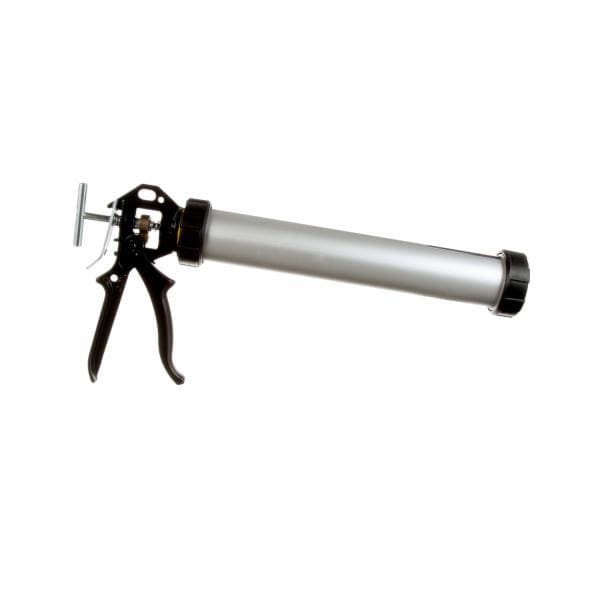
Manual applicator guns like the 3M™ Flex Pack Heavy Duty Applicator rely entirely on hand pressure to dispense material.
Best For
- Low-volume applications
- Field repairs
- Occasional maintenance work
- Small production runs
Advantages
- Lowest upfront cost
- No batteries or compressed air required
- Lightweight and portable
- Simple to maintain
Limitations
Because dispensing force depends on the operator, bead size can vary throughout the application.
Common challenges include:
- Inconsistent bead width
- Variable dispensing pressure
- Increased hand fatigue during extended use
- More difficult with high-viscosity materials
- Greater likelihood of over- or under-dispensing
Manual guns are an excellent choice for occasional use but become less efficient when consistency is critical or production volumes increase.
Pneumatic Applicator Guns
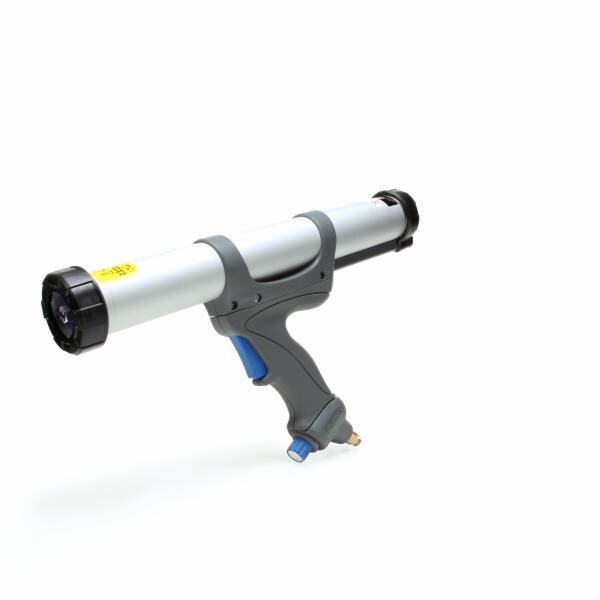
Pneumatic guns like the 3M™ Pneumatic Applicator 600A use compressed air to provide smooth, continuous dispensing pressure.
Best For
- High-volume manufacturing
- Assembly lines
- Production environments
- Repetitive dispensing applications
Advantages
A pneumatic system removes much of the variability introduced by manual force.
Benefits include:
- Highly consistent bead size
- Smooth material flow
- Reduced operator fatigue
- Better control with thicker adhesives
- Faster dispensing speeds
- Improved repeatability across multiple operators
Limitations
Pneumatic systems do require:
- Access to compressed air
- Air hoses
- Additional equipment setup
- Less portability around the facility
For facilities already using compressed air throughout production, these drawbacks are often minimal compared to the productivity gains.
Battery-Powered Applicator Guns
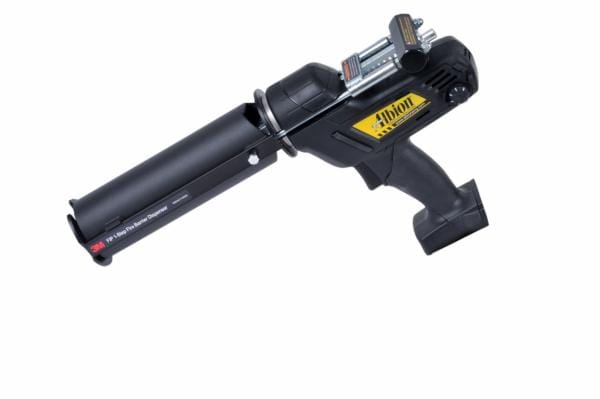
Battery-powered applicator guns like the Albion® Battery Operated Power Dispenser bridge the gap between manual and pneumatic systems by providing powered dispensing without the need for air lines.
Best For
- Mobile technicians
- Field installation
- Maintenance crews
- Medium-volume production
- Large facilities where mobility is important
Advantages
Modern battery-powered dispensers offer:
- Consistent dispensing pressure
- Greater portability than pneumatic systems
- Reduced operator fatigue
- Better bead control than manual guns
- No air hoses to manage
- Easy use in remote or difficult-to-access locations
Limitations
Considerations include:
- Higher purchase cost than manual guns
- Battery charging requirements
- Limited runtime depending on application
- Slightly heavier due to battery weight
For many maintenance teams, the increased mobility more than offsets these limitations.
How Dispensing Method Affects Bead Control
Different dispensing systems produce noticeably different results.
| Feature | Manual | Pneumatic | Battery-Powered |
| Bead consistency | Fair | Excellent | Very Good |
| Repeatability | Moderate | Excellent | Very Good |
| Operator fatigue | High | Low | Low |
| High-viscosity materials | Moderate | Excellent | Very Good |
| Material waste | Higher | Lowest | Low |
| Mobility | Excellent | Limited | Excellent |
| Production speed | Moderate | Fast | Fast |
Reducing Material Waste
One of the biggest hidden costs in adhesive application is inconsistent dispensing.
Powered dispensing systems help reduce waste by:
- Applying a more uniform bead
- Reducing excess squeeze-out
- Minimizing cartridge leftovers
- Preventing over-application
- Lowering cleanup time
- Reducing rework caused by inconsistent bonds
Even small improvements in material usage can create significant savings over thousands of production cycles.
Which Applicator Gun Is Right for You?
The best choice depends on your application and production environment.
Choose a manual applicator gun if you:
- Apply adhesives occasionally
- Need the lowest initial investment
- Perform mostly repair work
- Require maximum portability
Choose a pneumatic applicator gun if you:
- Operate a production line
- Require maximum repeatability
- Use adhesives continuously
- Already have compressed air available
Choose a battery-powered applicator gun if you:
- Need powered dispensing without air hoses
- Perform field service or facility maintenance
- Move between multiple workstations
- Want improved consistency with greater mobility
Partner with Experts Who Understand Your Application
Selecting the right applicator involves more than choosing between manual, pneumatic, or battery-powered operation. Material viscosity, cartridge size, mix ratio, production volume, and application requirements all influence the best solution.
As a trusted 3M Strategic Distributor, JAM Industrial Supply helps customers match dispensing equipment with the right adhesives, sealants, and application accessories for consistent, repeatable performance.
Whether you’re optimizing a production line or improving maintenance efficiency, our product specialists can help you find the dispensing solution that delivers better results while reducing waste. Contact us today for assistance!