- Abrasives and Accessories
- Adhesives, Sealants and Accessories
- Cleaning Supplies and Equipment
- Drill Bits and Accessories
- Electrical Items
- Hardware and Fasteners
- Health and Safety
- Lubricants and Penetrants
- Manufacturers
- Masking Products
- Office Supplies
- Packaging and Shipping
- Paint Application Products
- Painting Equipment and Supplies
- Polishing and Buffing
- Roto Mold Fasteners
- Tapes, Films and Accessories
Bottle Dispensing vs. Cartridge Systems: Matching Adhesive Packaging to Your Workflow
September 23, 2026
Most conversations about industrial adhesives start with chemistry: epoxy, polyurethane, acrylic, cyanoacrylate. But once you’ve picked the right formula, a second decision determines how well that adhesive actually performs on your line. That’s the packaging it comes in.
Bottle dispensing and cartridge systems aren’t interchangeable. Each is built around a different production reality, and choosing the wrong one shows up fast in wasted material, inconsistent bead lines, or an operator standing around waiting on a manual mix. Here’s how to match the packaging to the way your shop actually runs.
Bottle and Bulk Dispensing: Built for Volume
Bottle systems (squeeze bottles, pump-top bottles, and bulk containers feeding a dispensing gun or automated head) are designed to move adhesive fast and often in higher total volume. You’ll find plenty of these tools in JAM’s bottle dispensing accessories category.
Where bottles win:
- High-volume, repetitive applications. If you’re running the same bead or spot-bond hundreds or thousands of times a shift, bulk dispensing keeps operators from constantly swapping cartridges.
- Single-component adhesives. Hot melts, contact adhesives, and one-part construction adhesives don’t need a mixing step, so bottle and bulk-fed systems apply them cleanly with minimal setup.
- Lower cost per unit volume. Buying adhesive in bulk containers instead of pre-packaged cartridges typically brings the per-ounce cost down, a real factor once you’re running production quantities.
- Simpler equipment. Many bottle-fed setups need only a hand dispenser or a basic pneumatic pump, which keeps tooling investment low.
The trade-off: bottle systems generally sacrifice some precision. Bead width and volume depend more on operator technique or dispenser calibration, and there’s more exposure to contamination or curing in an open or frequently reopened container.
Cartridge Systems: Built for Precision and Control
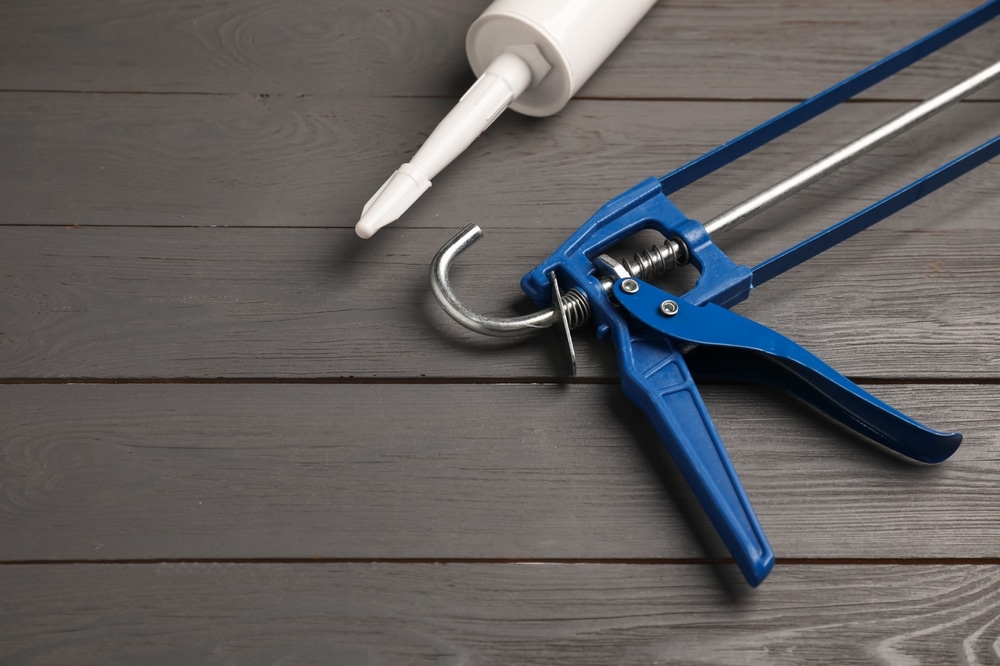
Cartridges (single-component tubes or dual-cartridge systems for two-part adhesives) are built around consistency, portability, and controlled mixing. JAM stocks a full line of cartridge and polyurethane reactive applicators to match these adhesives.
Where cartridges win:
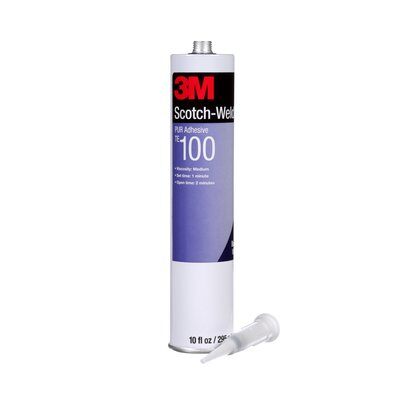
- Two-part adhesives that need an accurate mix ratio. Structural epoxies and polyurethanes like 3M™ Scotch-Weld™ PUR Adhesive TE100 often ship in dual cartridges specifically because the mix ratio is fixed at the nozzle. No measuring, no guessing, no off-ratio cure failures.
- Precision and low-to-medium volume work. Cartridges paired with a manual, pneumatic, or battery-powered applicator gun give tight control over bead size and placement, which matters for smaller assemblies, touch-up work, or jobs where every bead has to look and perform the same way.
- Portability across the plant. A cartridge and gun travel to the workstation instead of requiring the part to come to a fixed dispensing station, which is useful for job shops, field repair, or lines without dedicated adhesive stations.
- Less waste between jobs. Static mix nozzles are disposable and cheap to swap, so switching adhesives or colors doesn’t mean cleaning out a bulk system.
The trade-off: cartridges cost more per ounce than bulk material, and for genuinely high-volume runs, the constant cartridge changeovers can slow a line down instead of speeding it up.
A Quick Framework for Choosing
Ask these three questions before you standardize on either system:
- What’s your production volume? High-repetition, high-throughput work leans bottle or bulk. Lower-volume, higher-mix-variety work leans cartridge.
- Does the adhesive need mixing? Any two-part chemistry with a mix ratio that matters is a strong case for a dual-cartridge system, since it removes operator error from the equation.
- How much does bead precision matter to the finished part? If bead placement, width, or appearance is inspected or critical to bond performance, cartridges paired with the right applicator gun give you tighter control. If you’ve already thought through applicator gun types (see our post on manual vs. pneumatic vs. battery-powered applicator guns), that choice compounds whichever packaging decision you make here.
Many shops end up running both: bulk or bottle dispensing for the high-volume single-component work, and cartridges for structural two-part bonds or precision assemblies. That’s not indecision, that’s matching packaging to the job in front of you.
Why This Decision Is Easy to Get Wrong From a Catalog Page
Packaging specs don’t tell you how an adhesive behaves on your actual line: how it flows through your dispenser, how long your open time really needs to be with your cycle rate, or whether a switch from bottle to cartridge (or vice versa) changes your yield. That’s where having someone who’s actually stood on plant floors matters more than a data sheet.
As a 3M™ Strategic Distributor, JAM Industrial Supply doesn’t just sell adhesive by the case. Our team has walked lines with manufacturers across Northeast Ohio and helped them fix exactly this kind of packaging mismatch. In one case, swapping a customer to the right dispensing setup and adhesive pairing more than quadrupled the service life of the tool they were using, simply because the previous supplier hadn’t kept them current on what had changed.
If you’re not sure whether your next run calls for bottle dispensing or a cartridge system, or which 3M adhesive belongs in either one, that’s exactly the kind of question our team is built to answer.
Talk to JAM Industrial Supply about matching your adhesive packaging to your production line, or explore our full line of 3M adhesives, sealants, and accessories.